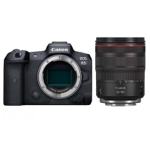
The Canon EOS C70 is a next-generation RF Mount 4K Super 35mm Cinema EOS System camera. It offers ...The Canon EOS C70 is a next-generation RF Mount 4K Super 35mm Cinema EOS System camera. It offers 120fps in 4K and 16+ stops dynamic range from Canon Log 2 and XF-AVC 410Mbps, featuring Dual Pixel CMOS AF. The camera boasts a compact, lightweight design made from carbon fibre polycarbonate for easy handheld use and seamless integration with gimbals, drones, or shoulder rigs. It captures beautifully clear and detailed 4K XF-AVC, 4K MP4, and 4K 120p slow motion. Its advanced DGO sensor provides an impressive 16+ stops of dynamic range. This camera is the first of Canon's professional cinema camcorders to feature Canon's high-quality and fast RF lens mount, ensuring speed, accuracy, and reliability for any workflow. This camera is designed to impress, delivering top-tier image quality, autofocus performance, and professional tools for capturing stunning video footage.
The Canon EOS C70 is designed for professional videographers seeking a compact, high-performance cinema camera. It excels at capturing stunning 4K footage with impressive dynamic range, making it ideal for various shooting scenarios. However, the advanced features may require a learning curve for those new to professional cinema cameras.
All features
Brand
Canon
Extended Product Information
FAQs
What kind of lenses can I use with the EOS C70?
The EOS C70 uses Canon's RF lens mount. You can use RF lenses or adapt EF lenses using a mount adapter.
What is the maximum resolution and frame rate for 4K recording?
The EOS C70 can record 4K video at up to 120fps in slow motion.
What type of media cards should I use?
Use high-speed SD cards that meet the camera's recording requirements. Check Canon's specifications for recommended cards.
Does the camera have image stabilization?
The EOS C70 does not have in-body image stabilization. However, many RF lenses feature image stabilization.
Can I use external microphones with the camera?
Yes, the camera has audio input ports for connecting external microphones for professional-quality audio.
What is the dynamic range of the EOS C70?
The camera offers a dynamic range of 16+ stops from Canon Log 2.
How do I update the camera's firmware?
You can update the firmware by downloading it from the Canon website and following the instructions provided.
Troubleshooting
Camera not powering on.
Check the battery and ensure it's properly inserted and charged. If the battery is charged, try a different power outlet.
Poor image quality.
Check the lens for any smudges or dirt. Make sure the lens is properly attached and the focus is correct. Adjust the camera settings (ISO, aperture, shutter speed) to improve image quality.
Autofocus not working correctly.
Ensure the lens has autofocus enabled. Select the appropriate autofocus mode for your shooting situation. Clean the lens and check for obstructions.
Camera overheating.
Avoid shooting in direct sunlight. Limit continuous recording times. Ensure proper ventilation around the camera.
Pros and Cons
Pros
Excellent 4K image quality with various recording options.
Fast and reliable autofocus performance with Dual Pixel CMOS AF.
Wide dynamic range for capturing detailed footage in challenging lighting conditions.
Compact and lightweight design for versatile shooting.
RF lens mount provides access to a wide range of high-quality lenses.
Cons
Advanced features may require a learning curve for beginners.
External accessories may be needed for optimal functionality.
May require more storage space due to high-resolution recording.
Battery life can be limited during intensive use.
Setup, Compatibility & Care
Lens Compatibility: Ensure compatibility with RF mount lenses. Consider adapter options for other lens mounts.
Media: Use high-speed SD cards that meet the camera's recording requirements. Check the Canon specifications for recommended cards.
Power: Use the Canon battery designed for the EOS C70. Have spare batteries on hand for extended shoots.
Audio: Use an external microphone for professional-quality audio. The camera has audio input ports for connecting microphones.
Care:
Keep the camera clean and protected from dust and moisture.
Use a lens cleaning kit to clean the lens. Avoid touching the lens with bare hands.
Store the camera in a dry, cool place when not in use.
Update the camera's firmware to ensure optimal performance and compatibility.



 Park Cameras£3,599.00Visit shop
  Wex Photo Video£3,599.00Visit shop