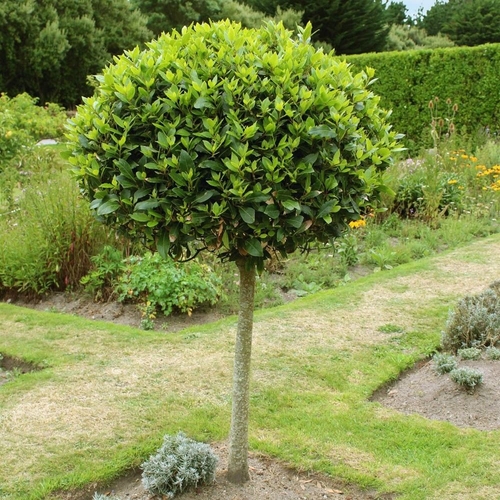
Add a stately look to your home with this beautiful Bay Tree. Bay Trees are easy to care for and l...Add a stately look to your home with this beautiful Bay Tree. Bay Trees are easy to care for and look simply stunning in pots either side of a door or pathway. The lush foliage has a mouth-watering flavour and rich aroma and can be added to marinades or used to add depth to cooking all year long. Bays can be very expensive in garden centres, so this fantastic offer is unbelievable value! Easy to maintain, this bay tree will enjoy moist, but well-drained soil, positioned in full sun or partial shade. Ensure you prune back in December, January, and February to keep your tree healthy, year after year. Bay leaves have a spicy, peppery, aromatic flavour and are commonly used in curries, soups and stews. Leaves can be used fresh or you can harvest them in summer and dry them. Dried bay leaves have a much more robust flavour but should be stored for no more than a year. Dried bay leaves can also be brewed to make a healthy and delicious herbal tea. The wood of bay trees can also be used to smoke meat, giving it a distinct and delectable flavour. This standard Bay tree reaches a height of 70-80cm (pot included), it's ideal for ground planting or as a patio feature. This adaptable tree thrives in sunny locations with well-drained soil, and container planting is easily achieved with a soil-based compost enriched with grit for drainage and stability. Regular feeding with controlled-release or liquid fertiliser from mid-spring to late summer will promote optimal growth. While hardy to -5°C, winter protection with fleece or hessian is advised, particularly for container-grown trees. Enjoy its year-round beauty, including its March to May blooms, and remember to repot every two years to maintain healthy soil. Please note that the tree's height may vary depending on the season; the image shown is a guide only.
This guide is for anyone looking to add a touch of elegance and culinary delight to their home or garden with the YouGarden Bay Tree Standard. This adaptable tree offers year-round beauty and flavorful leaves for cooking. Keep in mind that winter protection is advised, especially for container-grown trees.
All features
Brand
You Garden
Extended Product Information
FAQs
How tall will my Bay Tree grow?
The YouGarden Bay Tree Standard reaches a height of 70-80cm (pot included).
What kind of soil does it need?
It thrives in moist but well-drained soil.
How often should I water my Bay Tree?
Keep the soil moist but not waterlogged.
When should I prune my Bay Tree?
Prune back in December, January, and February.
How do I protect my Bay Tree in winter?
Protect from frost during winter, particularly for container-grown trees. Use fleece or hessian.
Can I use the leaves for cooking?
Yes, bay leaves have a spicy, peppery, aromatic flavour and are commonly used in curries, soups, and stews. Leaves can be used fresh or you can harvest them in summer and dry them.
How often should I repot my Bay Tree?
Repot every two years to maintain healthy soil.
Where is the best place to plant it?
Choose a location with well-drained soil and either full sun or partial shade.
Troubleshooting
Yellowing leaves
Check for overwatering or poor drainage. Adjust watering schedule and ensure the pot has drainage holes.
Leaf drop
This could be due to stress from environmental changes. Ensure adequate watering and protection from extreme temperatures.
Slow growth
Check the soil's nutrient levels. Feed regularly with controlled-release or liquid fertilizer from mid-spring to late summer.
Pros and Cons
Pros
Adds a touch of elegance to your space.
Provides fresh bay leaves for culinary use.
Easy to maintain with proper care.
Versatile planting options (ground or container).
Offers year-round beauty.
Cons
Requires winter protection in colder climates.
Height may vary depending on the season.
Setup, Compatibility & Care
Planting: Choose a location with well-drained soil and either full sun or partial shade.
Container Planting: Use a soil-based compost enriched with grit to improve drainage and stability.
Watering: Keep the soil moist but not waterlogged. Allow the soil to dry slightly between waterings.
Feeding: Feed regularly with controlled-release or liquid fertilizer from mid-spring to late summer.
Pruning: Prune back in December, January, and February to keep the tree healthy.
Winter Protection: Protect from frost during winter, particularly for container-grown trees. Use fleece or hessian.
Repotting: Repot every two years to maintain healthy soil.


 Homebase£31.00Visit shop
  wilko£31.00Visit shop
  Frasers£32.99Visit shop


